Import Policies of the Government and Their Impact on Indian Businesses

Why It Matters Now
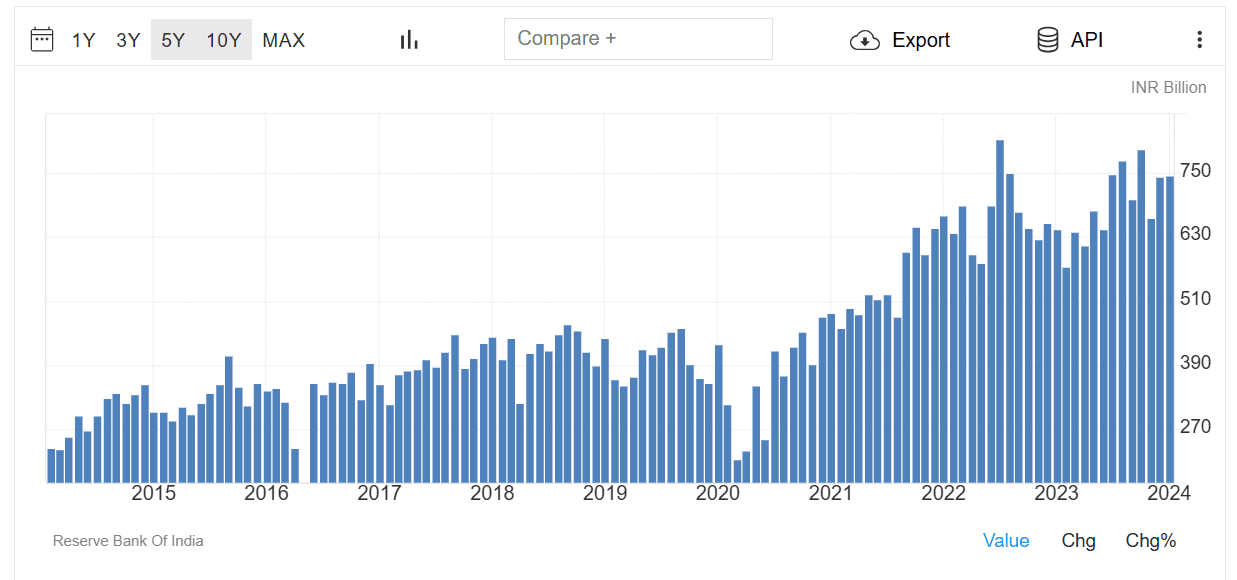
In the first nine months of FY2025-26 India's trade deficit with China was around $81 billion, this being based on imports amounting to about $96 billion. The small and medium-sized enterprises, or MSMEs, which number roughly 7.47 crore and account for nearly 31% of GDP as well as 49% of exports, are feeling the impact most. The growth of e-commerce is making the situation more pressing since Amazon, Flipkart and Meesho require sellers to obtain GST registration from their very first sale, thus bringing thousands of new traders into customs and BIS compliance all at once. For those selling on these platforms, it has now become almost as important to find a reliable Meesho, Amazon and Flipkart supplier who is already dealing with the compliance issues as it is to find the product itself.
{ Sources : https://theprint.in/diplomacy/chinas-trade-surplus-crosses-record-1-19-trillion-despite-trump-tariffs-us-trade-war-in-2025/2827902/ }
Who Regulates Imports
DGFT makes the Foreign Trade Policy, gives Import Export Code (IEC) and classifies goods as Free/Restricted/Prohibited.
The CBIC collects customs duty & IGST at the port. It also runs the AEO trusted-trader scheme.
The BIS promulgates Quality Control Orders (QCOs) to make certification mandatory for specified products.
DGTR investigates and proposes anti-dumping duties.
Legal Metrology Division is enforcing MRP and labeling regulations on imported packaged goods.

Key Import Policies to Know
IEC(Import Export Code): It is a number provided by DGFT, made up of 10 digits and based on PAN and valid for a lifetime. It costs ₹500 and is usually approved between 1-3 days. However, it needs an annual renewal; otherwise, the code will be deactivated, and shipments will be stalled. Any serious imported of stationery items remembers the renewal time.
ITC-HS Classification: Under the ITC-HS 2022 schedule, a product is classified as Free, Restricted, Prohibited, or Canalised. A wrong HS code can lead to illegal shipment.
Customs Duty and IGST: Goods and services tax impacts the cost of landing goods. For example, the total duty on a ₹1,00,000 CIF shipment, being subjected to 10% Basic Customs Duty and 18% IGST, comes to ₹30,980
which is an approximate 31% raise.
BIS Certification/QCOs: The latest count shows that there are over 187 QCOs that now apply to over 679 types of products, and this number is constantly growing. Please note that a product that may not require certification last year may need to get certified this year —
so check before making an order and not afterwards.
Paper Import Monitoring System (PIMS): It needs to be mentioned that prior to the delivery of any shipment of paper or paper product, one must get registered in PIMS. The purpose of introducing PIMS was to curb under-invoicing.
Anti-Dumping Duty: As of now, DGTR has imposed anti-dumping duties on the Chinese products more than 18 times since 2017. For example, anti-dumping duties have been imposed on decorative paper, paperboard as well as stationery items.
Legal Metrology Rules: All retail packages of imported goods must have the name and address of the importer, MRP, quantity of the product, date of importation, and country of origin written on the package. If the package does not comply with the above-mentioned requirements, a fine of ₹25,000 to ₹1 lakh can be imposed, and the goods can be confiscated by the authorities.
Impact Across Business Types
MSMEs have been able to receive assistance from the Budget 2025-26 classification change (investment and turnover limits raised by 2.5x and 2x) which has made credit more available to them; however, fixed costs for compliance such as BIS and PIMS still have a greater impact on MSMEs than they do on large companies.
Manufacturers are benefiting from anti-dumping and QCO protection against imports; however, they are also still paying the same duty levels on imported raw materials. The shift toward "China+1" sourcing is providing a huge advantage to certain industries such as stationery.
For traders and wholesalers, they survive or fail based on landed cost and compliance costs. A wholesale stationery or bulk stationery supplier in India can give itself an advantage by supplying more BIS-compliant goods than reverse importers.
Three layers of compliance face e-commerce retailers simultaneously: import laws, GST/TCS filing, and marketplace policies. A single error in GSTIN can deactivate a seller's account in an instant—hence, numerous merchants are on the lookout for a reliable online supplier instead of importing alone.
Case Study: DOMS and Flair
The two makers of stationery products- Flair Writing Industries and DOMS Industries rooted in Gujarat became public companies in late 2023. While DOMS Industries raised ₹1,200 crore, trading 77% above the issue price, Flair Writing Industries accumulated ₹593 crore on the first day of trading which oversubscribed the amount by 2.17 times. Both companies are undertaking expansion of domestic production utilising the funds raised in IPO citing China+1 strategy. Although China continues to be a leading supplier to the entire stationery import of India with 70-78% announcement, this dependency leads to increase in demand for a reputable direct importer from China capable of managing all relevant aspects such as BIS, PIMS and Legal Metrology for its clients.
{Sources: https://www.pocketful.in/blog/flair-vs-doms-unveiling-the-best-in-stationery-industry/ }
Benefits vs Challenges
Advantages: Effective digital process for IEC/DGFT operations; quicker clearance of AEO process for compliant importers which include MSMEs (within 24-48 hours); GST rationalization in September 2025 that will lead to cost reduction in printing costs; antidumping protection which protects domestic manufacturers and provides level playing field for compliant imports
Difficulties: obligations adding up to more than 30% of invoice value; quick changes in QCOs; PIMS leading to issues with lead time; unexpected anti-dumping duties; penalties from Legal Metrology for incorrect labels; lack of working capital due to pending IGST credits.
{Sources: https://www.plindia.com/news/gst-rate-cuts-stationery-notebooks-pencils-erasers/ }
Quick Compliance Checklist
● Register your business entity; obtain PAN and GST registration.
● Apply for an IEC (₹500, via the DGFT portal).
● Confirm your product's correct ITC-HS classification before ordering.
● Check whether a BIS QCO applies to your product category.
● Check for active or pending anti-dumping duty on your HS code.
● Register under PIMS if importing paper or paper-based products.
● Arrange compliant Legal Metrology labelling with your supplier before shipping.
● Work with a licensed Customs House Agent and calculate your full landed cost.
● Apply for AEO status once your import volumes justify it.
● Register your GSTIN with each marketplace before listing products.
● If sourcing isn't your core strength, vet a compliant bulk supplier India partner instead of building the whole chain yourself.
Bottom Line
● India's import policies aren't background noise — they're the operating environment for anyone sourcing goods from abroad, from a first-time stationery importer to a listed manufacturer. Landed cost, not FOB price, determines your real margin, and compliance across IEC, BIS, PIMS, GST and Legal Metrology is non-negotiable regardless of business size. Whether you import directly, work with a wholesale stationery supplier, or run a storefront on Meesho, Amazon or Flipkart, businesses that treat compliance as infrastructure — not an afterthought — are best positioned to benefit as India's "China+1" moment continues to unfold.
This article is for general informational purposes and does not constitute legal, tax, or customs advice. Always verify current requirements on the DGFT, BIS, and CBIC websites before making sourcing or pricing decisions.